

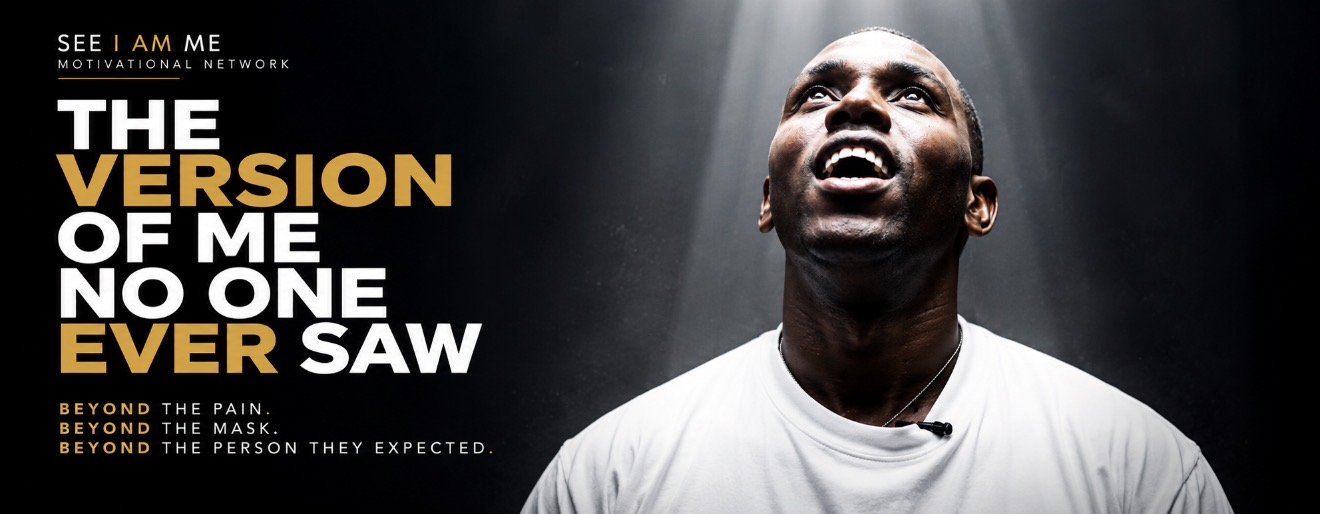
The Version of Me No One Ever Saw (Rejection as a Stepping Stone)
By RaShaun D. Warren
Keynote Speaker | Athlete | Leader | CEO & Founder of See I Am Me, a motivational network dedicated to empowering others to reach their highest potential | Opinion Columnist
There is a version of every successful person that remains largely invisible.
It is not the version that appears in photographs, on stages, in professional biographies, or in the stories people tell after the outcome is known. It is the quieter version. The one who sat alone after receiving disappointing news. The one who reread the rejection email several times, looking for a different meaning hidden somewhere between the lines. The one who wondered, often in silence, whether the dream was worth pursuing at all.
We live in a culture that has become remarkably skilled at documenting triumph. Success is archived, celebrated, and displayed. Failure, by contrast, tends to disappear into private memory. Yet failure and rejection are often where the most important chapters begin.
At the time, rejection rarely feels instructional.
It feels personal.
A closed door has a peculiar way of shrinking the world. The opportunity that seemed certain suddenly vanishes. The future you imagined becomes inaccessible. Questions emerge with surprising speed. Was I not qualified? Not talented enough? Not deserving enough?
The mind, eager for explanations, often settles on self criticism.
What many people eventually discover, however, is that rejection is frequently less about worth than about direction.
The distinction matters.
Worth suggests value.
Direction suggests movement.
One diminishes a person.
The other redirects them.
Looking back across the landscape of our lives, many of us can identify moments that initially appeared devastating but later revealed themselves to be transformative. The job we desperately wanted but never received. The relationship we fought to preserve but could not save. The opportunity that seemed destined for us until it belonged to someone else.
At the time, those experiences often feel like endings.
Years later, they begin to resemble beginnings.
This is one of life’s most curious paradoxes. We often recognize the meaning of rejection only after we have traveled far enough away from it to see the larger picture.
The novelist who collected letters of refusal before publishing a celebrated work. The entrepreneur whose failed venture became the foundation for a later success. The individual who lost one path and, in searching for another, discovered a life more aligned with who they truly were.
None of these stories erase the pain.
Pain deserves honesty.
Rejection hurts because human beings are wired for belonging. We seek acceptance. We long to be chosen. We want confirmation that our efforts matter. When those desires collide with disappointment, something deeper than ambition is affected.
Our identity enters the conversation.
The danger is that we begin treating rejection as evidence.
Evidence that we are incapable.
Evidence that we are inadequate.
Evidence that we should stop.
Yet rejection offers no such proof.
It is merely an event.
Its meaning depends largely upon the story we attach to it.
Some people encounter rejection and conclude that they are not enough.
Others encounter rejection and ask a different question.
What can this teach me?
That question changes everything.
It transforms rejection from a verdict into a lesson.
From a wall into a doorway.
From a stopping point into a turning point.
There was a season in my life when rejection arrived so frequently that it seemed almost routine. Doors closed with remarkable consistency. Plans dissolved. Expectations collapsed under the weight of reality. It became tempting to believe that progress belonged to other people.
Yet something unexpected happened during that period.
I became stronger.
Not all at once.
Not dramatically.
Quietly.
The strength emerged in the act of continuing.
In sending another application.
Making another call.
Trying again after disappointment.
Believing, despite contradictory evidence, that my future could still hold possibility.
What no one saw during those years was the internal work taking place beneath the surface. The development of patience. The cultivation of resilience. The slow realization that self worth could not be entrusted to external outcomes.
Those lessons proved far more valuable than immediate success would have been.
Success often rewards us.
Rejection often teaches us.
And while rewards feel good, lessons tend to endure.
Perhaps this is why so many people later describe their greatest disappointments as unexpected gifts. Not because suffering is inherently valuable, but because adversity reveals capacities we might never discover otherwise.
Courage is rarely developed when everything goes according to plan.
Perseverance is rarely strengthened by comfort.
Character is rarely formed without resistance.
The version of us that emerges from rejection often possesses qualities that could not have been acquired any other way.
If you find yourself in a season of disappointment, remember that the story is still unfolding.
The rejection you are experiencing today may eventually occupy a very different place in your narrative.
What feels like exclusion may become redirection.
What feels like loss may become preparation.
What feels like failure may become the beginning of a deeper understanding of who you are.
One day, people may notice your success.
They may admire your confidence.
They may celebrate your accomplishments.
What they will not see is the version of you that was shaped in the quiet aftermath of rejection.
The version that kept going.
The version that refused to surrender its future to a single closed door.
The version that understood, eventually, that rejection was never the end of the story.
It was simply part of how the story was written.
-RaShaun Warren